

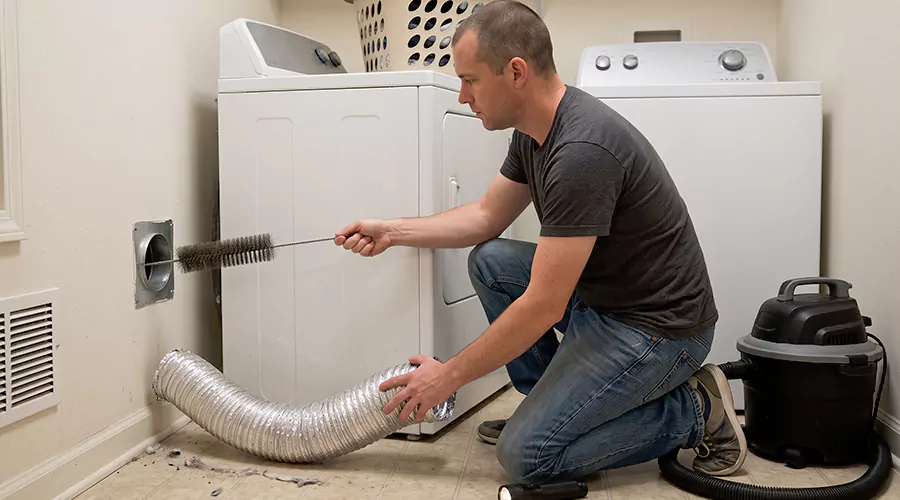
To clean an apartment dryer vent, start by removing lint from the dryer filter and checking the accessible exhaust connection for damage or buildup. Before cleaning ductwork inside a wall or ceiling, confirm with the landlord or property manager who is responsible for maintenance. Apartment dryer vents may run through concealed spaces or connect to a specially designed building exhaust system, making professional apartment air duct cleaning necessary for many installations.
Apartment dryers operate much like those in single-family homes, but their exhaust systems can be more complicated. A laundry closet may be located far from an exterior wall, requiring the duct to pass through a ceiling or vertical shaft. In taller buildings, maintenance workers may need access to common areas or rooftop equipment to inspect the complete exhaust route.
Lint buildup is still the main concern. Small fibers escape the dryer filter during normal operation and collect along the exhaust passage. Over time, these deposits can restrict airflow and cause longer drying cycles or overheating. Proper cleaning must address the actual exhaust route without damaging building-owned components.
For renters, another important consideration is permission. Cleaning an accessible lint screen is ordinary appliance maintenance, but disconnecting concealed ducts or opening a building shaft may be prohibited under the lease or building rules. Understanding which tasks are safe for residents helps prevent damage and delays.
Why Do Apartment Dryer Vents Need Regular Cleaning?
Apartment dryer vents require cleaning because lint accumulates inside the exhaust duct during normal appliance operation. Even when residents remove lint from the filter after every load, some smaller fibers continue into the ventilation passage. The material may settle around bends or connections before reaching the outdoor termination.
A clogged dryer exhaust reduces the amount of warm, moisture-laden air leaving the appliance. Clothes may remain damp at the end of a normal cycle, causing residents to run the dryer again. Restricted airflow can also contribute to abnormal heat buildup in and around the appliance.
Lint is combustible, which makes exhaust maintenance a fire-safety concern. The U.S. Fire Administration identifies failure to clean as a leading contributing factor in residential dryer fires. In apartment buildings, a damaged or obstructed duct deserves particular attention because concealed spaces may be located near other occupied units.
Cleaning the lint screen and cleaning the exhaust duct are different tasks. The screen needs attention after every drying cycle, while the duct requires periodic inspection and cleaning based on its condition and the building's maintenance schedule.
Are Apartment Dryer Vents Different From House Dryer Vents?
Apartment dryers may use the same basic exhaust components found in houses, but their duct routes are often less accessible. A house dryer may discharge through a nearby exterior wall. An apartment dryer might require a longer passage through a ceiling or service chase before the exhaust reaches the outdoors.
Some apartment buildings provide an individual exhaust duct for each dryer. Others, particularly certain multistory buildings, may use an engineered common dryer exhaust system designed under applicable mechanical codes. These systems can contain specialized fans or cleaning access points that should be serviced by the building's maintenance contractor.
Not every apartment uses a shared exhaust system, and ordinary dryer ducts should never be casually joined together. The building's actual design must be established before cleaning tools are inserted into concealed passages.
| Apartment Dryer Setup | Typical Exhaust Arrangement | Cleaning Responsibility to Confirm |
|---|---|---|
| In-unit dryer near outside wall | Individual duct through exterior wall | Lease and building rules |
| Interior laundry closet | Concealed duct through wall or ceiling | Property management |
| Upper-floor in-unit dryer | Longer or vertical exhaust route | Owner or building maintenance |
| Engineered common exhaust system | Building-controlled dryer exhaust arrangement | Building management or association |
| Shared laundry room | Several building-owned appliances and ducts | Property management |
| Ventless heat-pump or condensing dryer | No conventional exterior exhaust duct | Manufacturer's filter and condensate maintenance |
The first step in an apartment is therefore identifying what kind of dryer and exhaust system is installed. A conventional vented dryer needs a suitable outdoor exhaust. A listed ventless dryer has a different moisture-management design and should not be treated as though it has an ordinary exterior duct.
Who Is Responsible for Cleaning an Apartment Dryer Vent?
Responsibility depends on the lease, local law and which parts of the exhaust system belong to the building. Residents are usually expected to perform ordinary tasks such as cleaning the lint screen. Maintenance of concealed ducts may be assigned to the landlord or property management, but there is no universal rule that applies to every rental.
The situation can also differ between rental apartments and owner-occupied condominiums. A condo association's governing documents may identify certain vents as common or limited common elements. Those classifications can affect who arranges the cleaning and who pays for it.
Tenant Responsibilities
Residents can usually clean the removable lint screen and keep the surrounding laundry area free from loose fibers. They should also watch for warning signs such as slow drying and abnormal heat. Reporting these conditions promptly helps building maintenance identify problems before they become more serious.
A tenant should not assume that a lease allowing ordinary appliance maintenance permits opening walls or disconnecting a building exhaust duct. Work that affects concealed building components may require approval. The appropriate boundary depends on the property rules.
Landlord or Property Management Responsibilities
Landlords and property managers often coordinate work involving building-owned ducts and concealed exhaust routes. They may also maintain rooftop terminations or exhaust equipment serving several units. The exact obligation depends on the lease and local property maintenance requirements.
A management team can arrange a contractor with appropriate access and knowledge of the building's duct system. This is useful when a vent cannot be cleaned completely from an individual apartment. It also allows the building to document recurring blockages or defects that affect more than one unit.
Condo Association Responsibilities
Condominium buildings may assign maintenance responsibilities through declarations and association rules. An owner may be responsible for the dryer and some connections inside the unit, while the association maintains other portions of the exhaust system. Different associations allocate these tasks differently.
Condo owners should review their governing documents before hiring someone to work on common property. Cleaning a vertical service shaft or roof termination may require an approved building contractor. Coordinated maintenance may also reduce the need for repeated access to multiple units.
What Are the Signs of a Clogged Apartment Dryer Vent?
A clogged apartment dryer vent often causes the same symptoms as a blocked exhaust in a house. However, the source may be harder to identify because the duct runs behind walls or through common building areas. Residents should pay attention to changes in drying performance and unusual heat rather than trying to locate every concealed connection themselves.
Common warning signs include:
- Laundry takes noticeably longer to dry than before.
- Normal loads require more than one drying cycle.
- Clothes feel excessively hot when the dryer stops.
- The appliance cabinet becomes unusually hot during operation.
- Warm, humid air accumulates in the laundry closet.
- A burning smell develops while the dryer runs.
- Visible lint collects around an accessible exhaust connection.
- The transition duct appears compressed or damaged.
- The dryer shuts down unexpectedly.
- Other residents report similar exhaust problems.
- Maintenance records show that the vent has not been cleaned recently.
- Drying performance remains poor despite a clean lint filter.
These signs do not prove that the entire exhaust system is obstructed. A malfunctioning dryer can also cause abnormal drying performance. However, a clogged duct should be investigated because continued operation under restricted airflow can create additional safety concerns.
If the dryer produces a burning smell or shows signs of overheating, stop using it and report the problem immediately. If smoke or fire is present, evacuate and contact emergency services. Do not run several additional cycles to see whether the issue disappears.
What Can Apartment Residents Clean Themselves?
Residents can generally perform ordinary lint-filter maintenance and remove loose lint from safely accessible areas. The dryer manufacturer's instructions should guide these tasks. Anything involving concealed ducts or shared building infrastructure should be coordinated with property management.
| Component | Routine Resident Maintenance | When to Contact Management |
|---|---|---|
| Removable lint screen | Clean before or after every load | Screen is broken or missing |
| Accessible lint filter housing | Clean as manufacturer permits | Debris requires appliance disassembly |
| Floor around dryer | Remove loose lint and dust | Recurring lint discharge indicates a leak |
| Visible transition duct | Observe for crushing or damage | Replacement or disconnection requires approval |
| Duct inside wall or ceiling | Do not open without authorization | Cleaning or inspection needed |
| Roof or exterior termination | Report suspected blockage | Access or repair required |
| Shared dryer exhaust system | No unauthorized cleaning | Building-level service needed |
Apartment residents should avoid moving stacked washer and dryer units unless the appliance manufacturer and property rules permit it. Stacked appliances can be heavy and may require specialized installation procedures. Moving a gas dryer can also strain its fuel connection.
A small amount of visible lint near the filter is different from a substantial blockage inside a concealed duct. Household cleaning should not be used to bypass the need for professional building maintenance.
How to Clean an Apartment Dryer Vent Step by Step?
The safest approach begins with tasks that do not require disconnecting the building's exhaust system. Where a lease permits a resident to clean an accessible individual duct, the manufacturer's instructions must still be followed. The steps below separate routine household cleaning from work that requires property management or a qualified technician.
Step 1. Identify the Dryer Type
Check whether the apartment uses a conventional vented dryer or a ventless model. A conventional dryer sends moisture outdoors through an exhaust duct. A ventless heat-pump or condensing dryer uses a different system and may have additional filters or a condensate container.
The appliance's model label and instruction manual can help identify its design. Do not assume that every dryer located in a laundry closet has an outdoor vent. Using the correct maintenance procedure prevents unnecessary disassembly.
Step 2. Review the Lease and Building Rules
Before opening or disconnecting ductwork, check the property's maintenance instructions. Some buildings schedule professional cleaning for each unit, while others require residents to request service when problems occur. The rules may also limit who can move installed appliances.
If the instructions are unclear, contact property management. Ask whether the vent is individual or part of a building-controlled exhaust system. Knowing this helps avoid cleaning a passage that should only be serviced by an approved contractor.
Step 3. Stop the Dryer and Disconnect Electrical Power
Turn off the dryer and allow it to cool before performing accessible maintenance. Disconnect electrical power when the manufacturer's instructions call for it. Do not insert tools into exhaust openings while the appliance is operating.
A gas dryer requires special caution. If moving the appliance would stretch or disconnect its gas connection, stop and arrange qualified service. The need for vent cleaning does not justify disturbing a fuel line without appropriate precautions.
Step 4. Clean the Lint Screen
Remove the lint screen and clear away accumulated fibers. Examine the mesh for tears or visible residue. A damaged screen may allow more lint into the exhaust and should be replaced with a compatible part.
Some manufacturers recommend washing the screen when fabric softener residue reduces airflow through its openings. Follow the appliance instructions and dry the screen completely before reinstalling it. Never operate the dryer without its required filter.
Step 5. Clean the Accessible Filter Housing
Use a suitable vacuum crevice attachment or dryer lint brush to remove loose fibers from the filter housing where the manufacturer allows access. Work gently so the tool does not damage internal components. Do not remove sealed appliance panels as part of ordinary household maintenance.
Lint may collect just beyond the removable filter even when the screen itself is clean. Removing accessible deposits helps maintain airflow near the dryer. However, this does not replace cleaning the exhaust passage inside the building.
Step 6. Inspect the Visible Transition Connection
If the transition duct can be seen without moving the appliance, check whether it is crushed or sharply bent. A damaged connection may restrict exhaust airflow before it reaches the permanent duct. Look for loose lint around the connection, which may indicate that exhaust is escaping.
Do not pull the dryer out of a narrow closet without confirming that it can be moved safely and that the property permits it. Stacked units and built-in installations may require professional handling. Photograph any visible damage so management can evaluate it.
Step 7. Check for a Maintenance Access Point
Some apartment installations have an accessible cleanout or other service access provided for the exhaust system. These openings may be inside a utility area or in a building-controlled location. They should not be opened without permission and an understanding of the exhaust design.
An ordinary supply or bathroom exhaust grille is not a dryer vent cleanout. Removing unrelated ventilation components can damage the building or create airflow problems. Ask management to identify the correct access point if the duct needs professional cleaning.
Step 8. Report Suspected Concealed Blockages
If the dryer continues taking too long to dry or the transition duct appears damaged, submit a maintenance request. Describe the symptoms and include photographs where possible. Mention whether the problem has become more noticeable over several cycles.
Written reporting is useful because it provides a record of when the problem was identified. The property manager can then determine whether appliance repair or duct cleaning is appropriate. Do not continue operating a dryer that shows significant overheating symptoms while waiting for service.
Step 9. Have the Full Exhaust Duct Professionally Cleaned
A qualified technician should identify the complete exhaust route and use tools suitable for the duct material. Cleaning may require access from the apartment or a building-controlled termination. The work should physically remove lint rather than simply push debris farther into the passage.
Long concealed ducts may require specialized brushes and collection equipment. If the installation uses an engineered common exhaust arrangement, the contractor should follow that system's maintenance procedures. Improper work can affect the operation of other connected units.
Step 10. Inspect the Exterior Termination
The dryer exhaust must discharge outdoors through an appropriate termination unless the appliance is a listed ventless type. The exterior damper or other approved termination equipment should be checked for lint and defects. In apartments, the outlet may be located on an upper wall or rooftop.
Residents should not climb onto the roof or enter restricted building spaces to inspect the outlet. These areas are normally controlled by management. The technician should confirm that the termination functions as designed and is not restricted by debris.
Step 11. Reconnect and Verify the Dryer
After cleaning, any exhaust connections that were opened must be restored properly. The transition duct should not be crushed when the appliance is returned to its installed position. Gas and electrical connections must also remain safe.
The technician should verify exhaust airflow where appropriate and check for signs of continuing restriction. If drying performance remains poor after the duct is clear, appliance maintenance may be necessary. Cleaning should not be considered successful simply because a quantity of lint was removed.
Step 12. Record the Cleaning Date
Keep a record of when the full exhaust was cleaned and which areas were serviced. Residents may be able to request a copy of the maintenance report from property management. The record is particularly helpful when problems recur or when another technician needs to understand the exhaust arrangement.
A building-wide maintenance schedule can reduce uncertainty about which ducts have been cleaned. Where individual units are serviced at different times, accurate records help prevent missed exhausts or repeated visits.
How Are Dryer Vents Cleaned in High-Rise Apartments?
High-rise dryer vent cleaning can be more complicated because exhaust ducts may travel through long vertical chases or specially designed building systems. The cleaning method depends on whether each apartment has an independent duct or the building uses an approved common exhaust arrangement. The design should be identified before work begins.
A dedicated vent serving one apartment may travel vertically to the roof. This arrangement can require a long cleaning tool and safe access to the upper termination. The maintenance contractor must verify that lint is removed from the full passage rather than only from the connection behind the dryer.
Some buildings use engineered common multistory dryer exhaust systems. These can incorporate fans and designated cleanout locations. They are not equivalent to simply joining ordinary dryer ducts together, and their maintenance must account for the operation of the entire system.
Unauthorized cleaning can damage a concealed connection or interfere with equipment serving other units. High-rise residents should therefore report symptoms through management and have the appropriate building contractor perform deeper cleaning.
How Do You Clean a Dryer Vent in a Shared Apartment Laundry Room?
Shared laundry rooms usually contain appliances and exhaust components maintained by the building owner or property management. Residents can remove lint from the screen after using a machine, but the permanent exhaust system generally requires coordinated service. The exact responsibility depends on property policies.
High-volume laundry rooms may accumulate lint more quickly because dryers operate frequently. Staff should monitor drying performance and keep accessible lint collection areas clean. The exhaust ducts and terminations may require a maintenance schedule based on actual use and the equipment manufacturer's recommendations.
Residents can help identify problems by reporting machines that take unusually long to dry ordinary loads. A dryer that becomes excessively hot or produces a burning smell should be taken out of service until evaluated. Posting an out-of-service notice helps prevent other residents from continuing to operate the affected machine.
How Often Should Apartment Dryer Vents Be Cleaned?
Annual dryer vent cleaning is a useful starting point for many residential installations, but some apartments may need more frequent service. Long concealed ducts and frequent laundry use can increase the rate of lint accumulation. The schedule should follow the building's exhaust design and applicable maintenance requirements.
The lint screen needs attention before or after every load, regardless of the full duct cleaning schedule. A clean filter reduces the amount of material reaching the vent but does not stop all lint from entering. Routine filter maintenance and periodic duct cleaning remain separate responsibilities.
| Apartment Laundry Component | Suggested Maintenance |
|---|---|
| Removable lint screen | Every load |
| Accessible lint housing | Periodically, following appliance instructions |
| Transition duct | Inspect for visible damage and restrictions |
| Individual permanent exhaust duct | Approximately annually or as conditions require |
| Building-controlled exhaust equipment | Follow building maintenance plan |
| Exterior termination | Inspect during appropriate duct service |
| Dryer showing overheating symptoms | Remove from service until evaluated |
A dryer that begins overheating or producing unusual odors should not continue operating until the next scheduled maintenance visit. Warning signs require immediate reporting and assessment. The cleaning schedule should be adjusted when repeated blockages are identified.
Can You Use a Dryer Vent Brush in an Apartment?
A dryer vent brush may be suitable for certain safely accessible individual exhaust ducts, but it should not be inserted into a concealed apartment system without confirming the layout and obtaining necessary permission. Flexible brush rods can become trapped around bends or damage connections when used incorrectly. This is especially concerning when the duct runs through shared building spaces.
Residents may be able to use a smaller lint brush for the filter housing according to the manufacturer's instructions. This is different from inserting a long rotating tool into the permanent exhaust. The former addresses an accessible appliance component, while the latter may affect building infrastructure.
Do not use a plumbing snake or improvised leaf blower to force debris through an unknown apartment duct. A major blockage can cause lint to move into an unintended cavity if a concealed joint has failed. Professional inspection is preferable when the full route cannot be confirmed.
What Should You Avoid When Cleaning an Apartment Dryer Vent?
Improper apartment vent cleaning can damage a hidden duct or interfere with building ventilation. The main concern is working beyond the accessible components without knowing where the exhaust travels. Residents should also avoid moving installed appliances or opening concealed connections without permission.
Avoid these common mistakes:
- Disconnecting an unknown shared exhaust connection. The system may serve other equipment.
- Opening a wall or ceiling without permission. Concealed ducts are part of the building.
- Using a plumbing auger in the dryer exhaust. It can damage thin duct material.
- Blowing compressed air through an unknown route. It may scatter lint or separate weak joints.
- Moving a gas dryer unsafely. The fuel connection must not be stretched or disturbed.
- Climbing onto a roof for vent access. Qualified roof-access personnel should handle the work.
- Installing a mesh screen over an exterior outlet. Screens can trap lint and restrict exhaust.
- Running the dryer without a lint filter. More fibers can enter the exhaust.
- Ignoring repeated slow drying. A significant restriction may remain.
- Operating a dryer that overheats. Stop use and arrange assessment.
- Replacing approved metal connections with plastic hose. Unsuitable materials create additional hazards.
- Assuming appliance cleaning includes building duct cleaning. The full exhaust path should be checked separately.
The exact building rules may impose additional restrictions. A tenant should not attempt maintenance that interferes with common exhaust equipment or requires access to restricted service spaces. Coordination with management is often the safest path.
How Much Does Apartment Dryer Vent Cleaning Cost?
An individual apartment dryer vent cleaning may fall within the standard U.S. residential range of approximately $80 to $185 in 2026. More complicated upper-floor or roof routes can cost approximately $110 to $250 or more, depending on access. Building-wide cleaning programs may use different pricing because multiple units are serviced during one project.
These estimates are planning figures rather than a guarantee of what an apartment resident will pay. A landlord or condo association may arrange and fund the service depending on the lease or governing documents. Some properties may assign maintenance charges to residents or owners under their rules.
Before hiring a cleaner independently, confirm whether the building has an approved vendor or scheduled maintenance program. Unauthorized work could affect concealed components or result in charges that could have been avoided. The service scope should be agreed upon before any duct is opened.
When Should You Contact the Landlord or Property Manager?
Contact management when an apartment dryer shows persistent signs of restricted exhaust or the vent cannot be cleaned through ordinary accessible maintenance. A maintenance request should describe the actual symptoms rather than assume that lint is the only problem. This allows the building to arrange an appropriate inspection.
Useful information to include in the request includes the dryer's location and how long normal loads are taking to dry. Mention unusual heat, odors or a visible damaged transition connection. Photographs can help when a problem is visible without moving the appliance.
If the dryer is overheating or producing a burning smell, clearly state that it has been taken out of service. Do not continue running it while waiting for routine cleaning. Serious symptoms deserve prompt attention because they may involve a fire hazard.
How Can Apartment Residents Prevent Dryer Vent Clogs?
Residents can reduce lint accumulation by maintaining the appliance's accessible components and reporting exhaust problems early. A well-maintained lint filter helps keep excess fibers from entering the duct. Proper appliance loading and care also support normal dryer operation.
Clean the Lint Filter After Every Load
Remove accumulated fibers from the screen before or after each drying cycle. Check whether the mesh is damaged or coated with residue. A broken filter should be reported or replaced with an appropriate component according to the property's maintenance rules.
Avoid Overloading the Dryer
Follow the appliance manufacturer's loading instructions so clothing can tumble and dry normally. Overloading may extend drying time even when the vent is clear. Comparing similar loads helps identify when reduced drying performance represents a change rather than ordinary variation.
Report Visible Vent Damage
Notify management if the accessible transition duct looks crushed or disconnected. Do not repeatedly move a tightly installed appliance to adjust the hose. A damaged connection may require a technician to reposition or replace the material safely.
Keep the Laundry Area Clear
Remove loose lint from accessible floors and surfaces around the dryer. Avoid storing combustible materials directly against the appliance. Maintain any clearances required by the manufacturer's installation instructions.
Follow the Building Maintenance Schedule
Ask when the permanent exhaust was last cleaned and whether future service is scheduled. Report unusual drying times before a major blockage develops. Keeping a record of recurring problems can help management determine whether the duct needs more frequent cleaning or physical repair.
Conclusion
Cleaning an apartment dryer vent begins with ordinary lint-filter maintenance and identifying which exhaust components are safe and permitted for residents to access. Concealed ducts and building-controlled systems often require professional cleaning coordinated by property management. Proper maintenance removes lint and helps prevent airflow restrictions and overheating. Tenants should report slow drying or burning odors rather than attempt unauthorized duct work. Start by reviewing your apartment's maintenance instructions and checking whether the dryer exhaust has a documented cleaning schedule.